

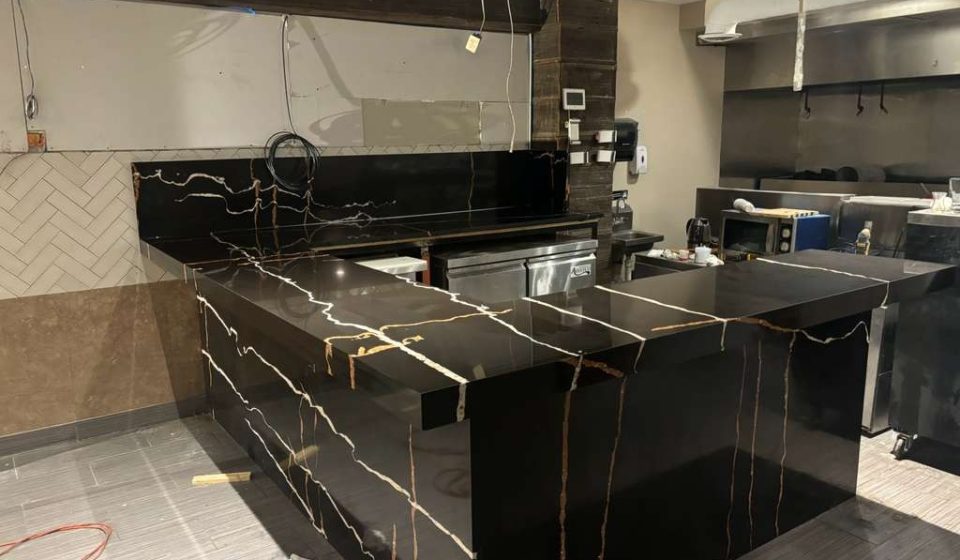

Quartz countertops have become the default choice for Virginia kitchen remodels — and not without reason. They don’t need sealing, they shrug off most household spills, and fabricators can cut them to fit nearly any layout. But getting from “I want quartz” to a finished kitchen is a 6-to-10 week process with real decision points that affect both cost and outcome.
This guide covers what to decide upfront, what a realistic budget looks like, and how the installation timeline actually works.
Why Homeowners Choose Quartz
Quartz is engineered stone – roughly 90–95% crushed quartz aggregate bound with polymer resin. The resin makes it non-porous, which means no annual sealing—and a lower risk of staining from coffee, wine, or acidic foods.
Granite is still common, but it requires more maintenance. Marble stains easily. Quartz sits in the practical middle: it looks premium, performs consistently, and doesn’t punish you for leaving a lemon wedge on the surface overnight.
One limitation worth knowing: the resin binders can discolour or crack under sustained temperatures above 150°F. Hot pots go on trivets — not directly on the surface.
Planning: Decisions That Affect Everything Downstream
Before you talk to a fabricator, nail down these variables.
Slab thickness. Most residential jobs use 3cm (about 1.25 inches). It looks substantial and doesn’t need a plywood buildup to hit countertop height. 2cm slabs cost less but almost always require that buildup underneath, which often offsets the savings.
Edge profile. Eased edges are flat, fast to fabricate, and inexpensive. Waterfall edges, mitered profiles, and ogee details cost more — sometimes well over $1,000 extra on a larger island.
Seam placement. For long kitchen runs, seams are unavoidable. Ask to review the slab layout before fabrication starts. Seams near the sink or across an island get scrutinised more than seams near the wall.
Backsplash. If you want quartz running up the wall as a backsplash, plan it now. Adding it later costs significantly more — a second template visit, a second fabrication run, and additional labor.
Budgeting for Quartz Countertops in Virginia
Installed costs for quartz countertops in Virginia generally break into three tiers:
| Tier | Installed cost per sq ft | Typical scope |
| Entry-level | $55–$75 | Standard colors, basic edge, no cutouts |
| Mid-range | $75–$110 | Designer patterns, undermount sink, eased edge |
| Premium | $110–$160+ | Book-match slabs, waterfall edge, complex layouts |
The average kitchen runs 30–40 square feet of countertop. At mid-range pricing, that puts most projects between $2,250 and $4,400 installed — before demolition, plumbing disconnects, or cabinet adjustments.
A few regional variables matter here:
- Northern Virginia (Arlington, Fairfax, Loudoun): Fabrication and labor costs run 10–15% above the state average. Overhead is higher, and demand keeps schedules tighter.
- Richmond and Hampton Roads: More competitive pricing from a denser market of independent fabricators.
- Material availability: Brands like Cambria, Silestone, and Caesarstone have distribution near the DC metro, which shortens lead times on popular series.
Get quotes from at least three fabricators. Make sure each one quotes the same slab series — different materials make comparisons meaningless.
The Installation Timeline, Step by Step
Most people underestimate how long this takes. Here’s a realistic breakdown:
Weeks 1–2: Selection and contract. Pick the slab in person at the fabricator’s showroom — catalogue photos don’t capture color variation accurately. Sign the contract and pay the deposit.
Weeks 2–4: Template appointment. After cabinets are installed and levelled, a technician creates a digital template of the space. This is the measurement that drives the cut. Don’t schedule templating until cabinets are completely done and secured. Even small gaps require a remeasure.
Weeks 4–6: Fabrication. The slab gets cut, edged, and polished at the shop. Most Virginia fabricators quote one to three weeks; complex layouts or backlogged shops can push this to four.
Weeks 6–8: Installation. Installation runs from a half-day to a full day depending on kitchen size. The crew sets the stone, applies adhesive, and caulks seams and edges. Avoid using the sink for at least 24 hours while the caulk cures.
Total realistic timeline: six to ten weeks from signed contract to usable countertops, assuming no cabinet delays or material backorders.
Common Mistakes Worth Avoiding
Ordering before cabinets are level is the most expensive mistake—it forces a remeasure or, worse, a recut. Underestimating the number of cutouts is second; each sink, cooktop, or faucet hole adds cost and complexity. Third is skipping the in-person slab selection. Photos lie. Variation across slabs in the same series is real, and surprises at installation are hard to undo.
Frequently Asked Questions
Do quartz countertops need to be sealed? Q
No. Quartz is non-porous by construction — the resin fills any gaps between quartz particles during manufacturing. Unlike granite or marble, it won’t absorb liquids and doesn’t require periodic sealing or special stone cleaners.
How do quartz countertops hold up in Virginia’s climate?
Well, with one caveat. Indoors, quartz is stable through Virginia’s humidity swings and temperature changes — it won’t expand or contract meaningfully. The issue is UV exposure: prolonged direct sunlight can cause slight discoloration in some quartz series over time. For kitchens with large south- or west-facing windows, ask your fabricator which series use UV-stable pigments.
What’s the difference between quartz and quartzite?
They’re different materials. Quartz is engineered stone – manufactured. Quartzite is a natural stone that forms when sandstone metamorphoses under heat and pressure. It looks similar to marble, requires sealing, and typically costs more. If a showroom uses the terms interchangeably, ask for written clarification before signing anything.