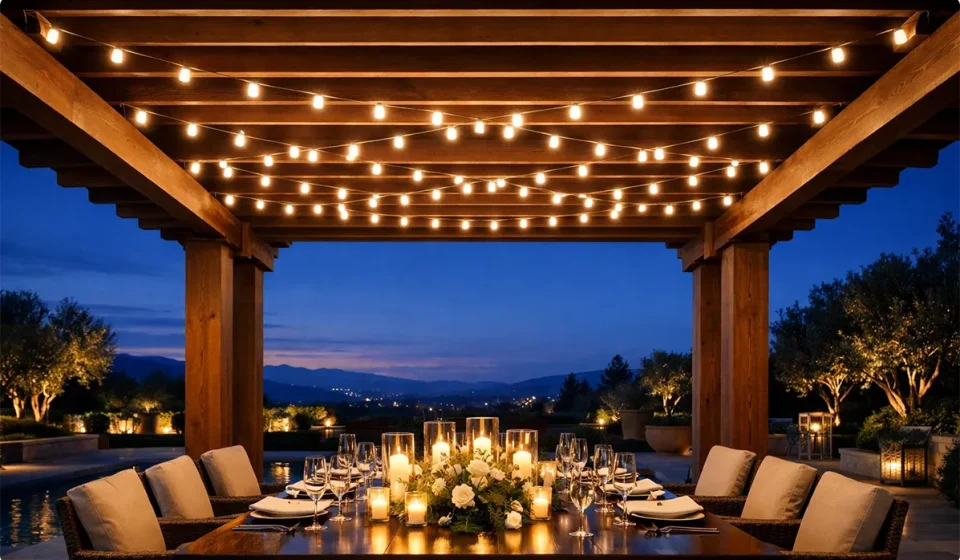

A beautiful pergola can turn ugly fast when the lights look charming but the power setup feels sketchy. Good string light wiring is not about hiding a cord and hoping rain never finds it. It is about giving every bulb, plug, cord, outlet, and support point a safe path to do its job without turning your backyard into a weekend hazard.
Most American homeowners add pergola lights for dinners, football nights, birthdays, and slow summer evenings that stretch past sunset. That casual use is exactly why the setup needs care. A rushed weekend job may work on Friday and fail during the first wet, windy night. For homeowners comparing outdoor upgrades and practical project ideas, a reliable home improvement planning resource can help connect style choices with safer decisions before money gets spent.
The best pergola lighting feels effortless when you see it. Behind that easy glow, though, the power source, cord rating, mounting path, and weather protection all need to agree with each other. Beauty comes last. Safety earns the first seat.
String Light Wiring Starts With the Power Source
Power is where the whole project tells the truth. A pergola can have perfect bulbs, rich wood, clean furniture, and a magazine-ready patio, yet one bad outlet choice can weaken the entire setup. The mistake many homeowners make is treating outdoor lighting like indoor décor with longer cords. Outside, water, sun, insects, lawn tools, and temperature swings all join the job.
Why a GFCI outdoor outlet matters before the first bulb goes up
A GFCI outdoor outlet is the first thing to check because outdoor power always carries a higher shock risk. Rain does not need to pour sideways to create trouble. Damp hands, wet decking, morning condensation, or a splash from a pool can all change how safe that plug feels.
A proper outdoor receptacle should be weather-resistant, protected by GFCI, and covered by a cover made for outdoor use while a cord is plugged in. That last part matters more than many people think. A flip cover that only protects the outlet when nothing is plugged in does not solve the problem during the exact hours your lights are running.
A homeowner in Ohio may plug in lights under a covered cedar pergola and assume the roof slats protect everything. Then a storm pushes rain at an angle, water runs along the cord, and the outlet becomes the weak point. The counterintuitive truth is simple: covered does not always mean dry. Outdoor power needs protection based on exposure, not wishful thinking.
How to keep temporary cords from becoming permanent wiring
Extension cords are made for temporary use, not as a hidden wiring system for a pergola. That sounds strict, but it protects you from one of the most common backyard mistakes: running a cord along a fence, tucking it under mulch, and pretending it became part of the house.
A temporary cord should stay visible enough to inspect, rated for outdoor use, sized for the load, and kept away from standing water. It should never be pinched by a door, buried under gravel, stapled through the jacket, or wrapped so tightly around a post that the insulation wears down over time. The cord should serve the lights, not become a secret hazard.
The quiet red flag is convenience. When you leave the same temporary cord in place for months because it “works fine,” the setup has crossed into a gray area. At that point, a licensed electrician should install a proper outdoor circuit or receptacle near the pergola. That costs more upfront, but it removes the ugly habit of trusting a cord to act like wiring.
Plan the Pergola Lighting Layout Before Anything Gets Plugged In
A pergola lighting layout should begin on paper, not on a ladder. Most people start with the look they want: zigzags, straight runs, border lighting, or a soft canopy effect above the table. That is fine for mood, but the layout also decides where strain lands, where water can travel, and how hard the plugs must work.
How far should sockets hang from wood, fabric, and furniture?
Bulb placement affects more than style. Sockets should hang where people will not bump them, where fabric canopies will not rub them, and where heat has room to escape. LED string lights run cooler than old incandescent bulbs, but the socket, plug, and cord still deserve breathing space.
A low-hanging strand over a patio dining table may look cozy in photos, yet it can become annoying once guests stand up with serving trays or kids wave pool noodles under it. A better approach is to mark the walking path first, then shape the lights around that path. The setup should serve the space during normal use, not only during a still photo.
A strong pergola lighting layout also respects the structure. Do not let bulbs rest against wood beams, shade cloth, vines, or outdoor curtains. The unexpected insight here is that tighter is not safer. A little controlled slack lets the strand move with wind instead of pulling hard against every anchor.
Where should a weatherproof electrical box sit?
A weatherproof electrical box should sit where it is protected, reachable, and not forced to carry tension from the light strand. That means the outlet location should be planned as part of the design, not treated like an afterthought after the lights are already hanging.
The best location often sits on the house wall facing the pergola, on a nearby exterior post, or on a code-approved structure where an electrician can run proper outdoor wiring. It should not sit where sprinklers hit it every morning, where patio furniture blocks access, or where the cord must stretch like a rope to reach the first strand.
A weatherproof electrical box also needs the right cover for the way it will be used. If the lights stay plugged in during an evening, the cover should protect the outlet while the plug is inserted. That sounds small until you see a cheap flat cover popped open all night during rain. Good outdoor work often looks boring. That is the point.
Choose Hardware That Survives Heat, Rain, and Everyday Use
The hardware makes the difference between a setup that ages well and one that looks tired by Labor Day. Outdoor light installation is not the place to save a few dollars on mystery cords, thin hooks, or no-name adapters. The backyard is harsher than it looks, especially in places with hot summers, freeze-thaw winters, coastal air, or heavy spring storms.
Which outdoor light installation parts are worth buying?
Buy lights listed for outdoor use, cords marked for outdoor use, and connectors that match the expected exposure. Look for product labels from recognized testing labs, check the wattage limits, and read the manufacturer’s spacing and connection rules before hanging anything. The small print is dull, but it often tells you how many strands can connect safely.
LED string lights are usually the smarter choice for pergolas because they draw less power and reduce heat compared with older bulbs. That does not mean every LED strand can connect forever in one long chain. The manufacturer sets the limit, and that limit matters even when the lights appear to turn on without trouble.
A real example: a family in Phoenix may choose heavy commercial-style LED strands because they want a café look over a backyard table. The bulbs may be efficient, but the sun can beat on the cord all day. UV-rated materials, outdoor-grade insulation, and solid support points matter as much as the bulb style.
Why cable support matters more than bulb style
Support carries the load, not the electrical cord. That sentence should guide the whole install. String lights should hang from guide wire, cable, hooks, or mounting points designed to hold weight. The electrical wire should not act as a clothesline.
When wind hits a pergola, each strand moves. If the strand is pulled tight between posts, that movement transfers stress to sockets, plugs, and splices. Over time, the damage can hide under the jacket or at the molded plug where you rarely look. A sagging line can be ugly, but an over-tight line can be worse.
Use screw eyes, stainless cable, outdoor-rated zip ties, or clip systems that do not pierce the cord. Avoid staples, nails, and sharp fasteners. The goal is not to trap the wire. The goal is to guide it. A clean support system keeps the lights in place while letting the electrical parts remain electrical parts, not structural parts.
Build a Safer Routine After the Lights Are Working
The first night the lights turn on feels like the finish line, but outdoor lighting is never finished in the same way a painted wall is finished. Weather keeps testing it. People move furniture. Dogs chew near posts. Garden crews drag hoses. A safe setup needs small habits that catch problems before they grow teeth.
How do timers, inspections, and storms change the setup?
Timers reduce wear because the lights do not run longer than needed. They also help when people forget to switch things off after a late dinner or a holiday gathering. Use an outdoor-rated timer or smart plug made for the location, and keep it protected the same way you protect the outlet.
Monthly inspection sounds fussy until you find one cracked socket before rain finds it. Check for brittle insulation, loose bulbs, darkened plugs, warm connectors, sagging strands, and cords rubbing against rough wood. After storms, inspect again before turning the lights back on. Wind has a way of moving things one inch at a time.
The counterintuitive part is that the prettiest setups can hide the most wear. Vines, fabric, and decorative wraps may soften the look, but they can also hide damaged cords and trap moisture. Keep the power path visible enough that you can inspect it without taking half the pergola apart.
When should a homeowner call an electrician?
Call an electrician when the project needs a new outlet, a new circuit, hardwired controls, buried conduit, panel work, or any repair involving household wiring. DIY confidence does not replace permits, code knowledge, or test equipment. A pergola sits outside, and outside mistakes can punish small shortcuts.
An electrician can also help when your outdoor space has grown beyond one string of lights. Maybe you added a fan, a small fridge, landscape lighting, speakers, and a heater. Each item may seem harmless alone, but together they create a load problem that a single patio outlet was never meant to carry.
A second GFCI outdoor outlet near the pergola may be safer and cleaner than one long cord from the back door. That is the kind of boring upgrade that improves the space without calling attention to itself. Nobody praises the outlet during dinner. They enjoy the lights because the power system does its job in silence.
Conclusion
A pergola should feel relaxing, not risky. The glow over the table, the shadows on the posts, and the soft line of bulbs across the beams all depend on choices that most guests will never notice. That hidden work is where safety lives.
The smartest string light wiring plan begins with protected power, outdoor-rated parts, strong support, and a layout that respects real backyard life. Rain, heat, pets, ladders, furniture, and weekend shortcuts all have a vote. You do not need to fear the project, but you do need to stop treating it like indoor decorating with a longer cord.
The best move is to plan the power before buying the lights. Check the outlet, read the labels, map the layout, and decide where a licensed electrician belongs in the process. A safe pergola lighting setup should look warm, work cleanly, and give you one less thing to worry about when the sky turns dark.
Walk your pergola tonight, find the weakest part of the setup, and fix that before you hang one more bulb.
Frequently Asked Questions
Can I plug pergola string lights into a regular outdoor outlet?
Yes, but only when the outlet is properly rated, weather-resistant, GFCI protected, and covered for outdoor use while the plug is inserted. A standard indoor-style outlet on an exterior wall is not enough for a safe backyard lighting setup.
Do outdoor string lights need a GFCI outlet for safety?
Outdoor string lights should use GFCI protection because moisture increases shock risk. A GFCI can shut power off when it senses a ground fault, which makes it an important safety layer for patios, pergolas, decks, and other exposed spaces.
How do I hide pergola light cords without creating a hazard?
Hide cords by routing them neatly along beams or posts with outdoor-rated clips that do not pierce the jacket. Do not bury extension cords, staple through wires, pinch cords behind doors, or cover damage with tape. Clean routing should still allow inspection.
What kind of extension cord is safe for outdoor pergola lights?
Use an outdoor-rated extension cord with the right amp rating, wire gauge, length, and testing label for your lights. The cord should have a jacket made for outdoor exposure and should never run through puddles, snow, mulch, or high-traffic walking paths.
Can I leave pergola string lights outside all year?
You can leave outdoor-rated lights outside if the manufacturer allows year-round exposure, but they still need inspection. Cold, UV exposure, storms, and pests can damage cords and sockets over time. Remove or protect them during harsh weather when needed.
How many string light strands can I connect together?
Follow the manufacturer’s stated connection limit, not guesswork. LED strands often allow more connected runs than incandescent strands, but every product has its own maximum. Exceeding that limit can overheat cords, plugs, or sockets even when the lights still turn on.
Should pergola string lights hang from the electrical cord?
No. The electrical cord should not carry the main weight of the lighting run. Use guide wire, hooks, screw eyes, or proper support hardware so the cord powers the bulbs while the support system carries the pull, movement, and wind load.
When is hardwiring pergola lights better than plug-in lights?
Hardwiring is better when you want permanent controls, a cleaner look, more power capacity, or fewer exposed cords. It should be handled by a licensed electrician, especially when the project involves a new circuit, buried conduit, switches, or changes to household wiring.