

Choosing a countertop or interior surface involves more than selecting a color that looks attractive today. Acrylic solid surface offers designers, homeowners, and commercial project teams a combination of visual flexibility, fabrication possibilities, and practical performance that can work across many interior applications.
Hyundai L&C brings this material category to life through Hanex Solid Surfaces, which are crafted on an acrylic canvas with an emphasis on design and quality.
What Is Acrylic Solid Surface?
Acrylic solid surface is a manufactured, nonporous surface material commonly used for countertops, bathroom surfaces, wall applications, and other interior design features. Unlike natural stone, which is quarried and naturally formed, solid surface materials are engineered to provide consistent characteristics throughout the material.
This composition gives acrylic solid surface an important advantage: the material can be fabricated into customized shapes and designs. Seams can also be made less visually prominent when the product is fabricated correctly, creating a more continuous appearance across a finished installation.
For designers, this means the material is not limited to conventional rectangular countertops. Curves, integrated details, custom edges, and coordinated surfaces can all contribute to a more intentional design.
Why Acrylic Solid Surface Stands Out
The value of acrylic solid surface goes beyond its appearance. Its characteristics make it suitable for spaces where design, usability, and maintenance need to work together.
1. Design Flexibility
One of the strongest reasons to consider solid surface countertops is the freedom they provide during the design and fabrication process.
Acrylic-based materials can support a broad range of visual styles, from understated neutrals to dramatic patterns. This makes them suitable for contemporary kitchens, hospitality environments, healthcare interiors, offices, retail spaces, and residential bathrooms.
The material can also be shaped to accommodate specific design requirements. Instead of forcing a room to conform to the limitations of a countertop, designers can consider how the surface itself can contribute to the overall form of the space.
2. A Consistent Visual Experience
Natural materials are valued for their individuality, but consistency can be equally important in a carefully coordinated interior.
Acrylic solid surface provides designers with greater control over the visual relationship between different areas. Countertops, backsplashes, vanities, and other surfaces can be selected to work together rather than appearing as unrelated elements.
This consistency is particularly useful in commercial projects, where a recognizable design language may need to continue throughout multiple rooms or locations.
3. Nonporous Surface Characteristics
Surface performance matters just as much as appearance in kitchens, bathrooms, and other frequently used areas.
Acrylic solid surface is nonporous, meaning it does not have the same open-pore structure associated with some natural stone materials. This characteristic makes the surface easier to keep clean and helps reduce concerns associated with substances penetrating the material.
However, nonporous does not mean maintenance-free. Routine cleaning and following the manufacturer’s care recommendations remain important for preserving the surface over time.
Acrylic Solid Surface vs. Other Countertop Materials
No single countertop material is appropriate for every project. The better approach is to compare materials according to how a space will actually be used.
Quartz, for example, is often selected for its durability, engineered consistency, and stone-like appearance. Natural stone may appeal to those who want distinctive geological variation and a material formed by nature.
Acrylic solid surface takes a different approach. Its value is closely connected to fabrication flexibility, design continuity, and the ability to create a cohesive finished installation.
Before choosing a material, consider:
- How frequently the surface will be used
- Whether the project requires custom shapes or details
- Desired color and pattern consistency
- Cleaning and maintenance expectations
- The importance of inconspicuous seams
- The type of fabrication and installation required
- How the surface will coordinate with cabinetry and surrounding materials
The right choice should reflect the demands of the project rather than simply following a current design trend.
Where Acrylic Solid Surface Works Best
Acrylic solid surface can serve many purposes beyond a standard kitchen countertop.
Kitchen Countertops
Kitchens require surfaces that combine visual appeal with everyday practicality. Solid surface countertops can create a streamlined appearance while coordinating with cabinets, backsplashes, islands, and other design elements.
For kitchens with unusual layouts, fabrication flexibility can also be useful when standard countertop dimensions do not adequately address the design.
Bathroom Vanities
Bathrooms often benefit from visually continuous surfaces. An acrylic solid surface vanity can be coordinated with surrounding wall treatments and cabinetry to create a unified appearance.
The material’s nonporous characteristics are also relevant in spaces where regular cleaning is part of everyday use.
Commercial Interiors
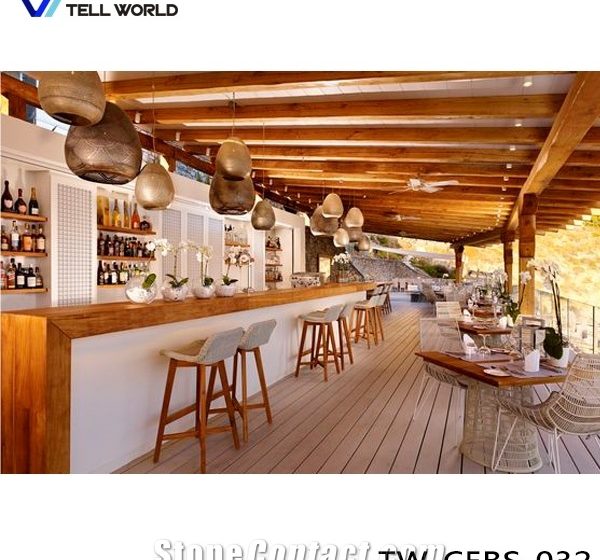
Hotels, restaurants, offices, retail environments, and other commercial spaces frequently require materials that balance design requirements with practical considerations.
A solid surface can support a distinctive visual identity while allowing designers and fabricators to address project-specific dimensions and details.
Healthcare and High-Use Environments
When surface hygiene and routine cleaning are important considerations, material selection deserves careful attention. Nonporous surfaces can be advantageous because their surface structure does not readily absorb liquids.
The specific product, application, installation method, and cleaning requirements should always be reviewed before specifying a material for a specialized environment.
Design Tips for Choosing Acrylic Solid Surface
Selecting the material is only one part of creating a successful interior. The way the surface interacts with the rest of the room can determine whether the final result feels cohesive.
Consider the Entire Color Palette
Do not choose a countertop in isolation. Compare samples alongside cabinetry, flooring, wall finishes, hardware, and lighting.
A surface that appears warm in one showroom may look different under the lighting conditions in a home or commercial space. Viewing physical samples within the intended environment can provide a more reliable impression.
Think About Pattern Scale
Pattern scale should correspond with the size and visual activity of the room.
A dramatic pattern can become a focal point on a large island, while a quieter design may work better when the space already contains detailed cabinetry, decorative tile, or strong architectural features.
Plan Seams and Edges Early
Fabrication details should be considered during the design stage rather than treated as an afterthought.
Discuss seam placement, edge profiles, sink configurations, backsplashes, and other details with qualified professionals before fabrication begins. Early planning can help ensure the finished surface supports the intended appearance.
Match the Material to the Lifestyle
A beautiful surface still needs to make sense for the people using it.
A busy family kitchen may have different priorities from a lightly used guest bathroom. Likewise, a hotel reception area may require different considerations from a private residential vanity.
The most effective material decisions begin with actual use rather than appearance alone.
How to Get Better Long-Term Results
Acrylic solid surface can provide lasting value when the product is properly specified, fabricated, installed, and maintained.
Start by reviewing the manufacturer’s technical information and care recommendations. Professional fabrication is also important because details such as seams, cutouts, edges, and supports influence the finished result.
Once installed, use appropriate cleaning products and avoid treating the surface as indestructible. Even materials designed for everyday use benefit from sensible care and attention.
For larger projects, working with an experienced dealer or fabricator can make the process more straightforward. Product manufacturers such as Hyundai L&C USA provide dealer resources and project information to help customers evaluate surface options and installation considerations.
Is Acrylic Solid Surface Right for Your Project?
The best countertop decision is rarely about finding the single “best” material. Instead, it involves identifying the surface that aligns with a project’s design, fabrication, maintenance, and performance requirements.
Acrylic solid surface deserves consideration when design flexibility, consistent aesthetics, nonporous characteristics, and fabrication possibilities are important priorities. It can support everything from residential countertops and bathroom vanities to specialized commercial interiors. Hyundai L&C offers surface solutions designed to meet a range of contemporary interior design needs.
Before making a final selection, compare samples, review technical specifications, understand maintenance requirements, and discuss fabrication details with qualified professionals. A surface should not only look right when installed; it should continue to make sense as the space is used.
With thoughtful planning, acrylic solid surface can become more than a functional countertop. It can serve as an intentional part of the architecture, helping connect color, form, function, and everyday living into one cohesive interior.