

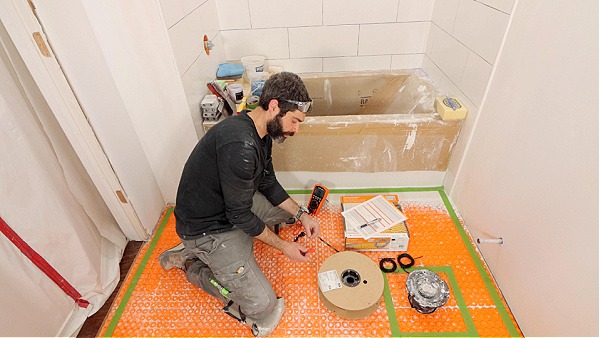

Cold tile has a way of making a bathroom feel unfinished, even when every fixture looks perfect. A well-planned heating cable installation can turn that early-morning shock into steady comfort without making the room feel overbuilt or expensive. For many U.S. homeowners, the appeal is simple: warm floors, cleaner wall space, and a bathroom that feels upgraded every single day.
The catch is that electric heat under tile is not a casual weekend craft. It sits inside mortar, under flooring, and near water, so the planning matters as much as the hands-on work. Smart DIYers treat this as a precision project, not a guessing game. Before opening a box or mixing thinset, read the manufacturer’s manual, check your local code, and know where licensed electrical work begins. The National Electrical Code exists to protect people and property from electrical hazards, and NFPA identifies the 2026 NEC as the current edition, though local adoption can vary by city and state.
A bathroom floor heating project rewards patience. You measure twice, test often, protect the cable, and keep the wiring side clean. Sites that publish trusted home improvement publishing often make the same point: the work is only “DIY-friendly” when the homeowner respects the parts that are not optional. The floor can forgive a slightly crooked tile. It will not forgive a cut cable buried under grout.
Planning the Bathroom Floor Before You Touch the Cable
Good heated floors start on paper, not on the subfloor. The biggest mistake DIYers make is treating the cable like an extension cord they can snake anywhere that looks empty. It is not. The cable has spacing rules, clearance rules, bend limits, sensor requirements, and power limits that come from the listed system, not from guesswork.
A small bathroom in Ohio, for example, may only need heat in the open walking zone between the vanity, toilet, and tub. Running cable under a vanity cabinet or tight against the toilet flange wastes energy and can create heat-trap problems. The floor feels better when the warm zones match how your feet move through the room.
Measuring the real heated area, not the whole room
The tape measure should follow usable floor space, not wall-to-wall dimensions. Subtract the footprint of the vanity, tub, shower base, toilet base, floor registers, and any fixed storage. A 60-square-foot bathroom may have only 32 square feet that should receive heat.
This is where many DIYers overspend. They buy a kit based on the room size, then discover the cable is too long for the safe heating zone. Most electric floor cables cannot be cut shorter. Cutting one can destroy the system, void the listing, and create a hidden failure point inside the floor.
A better approach is to sketch the bathroom on graph paper or a digital floor plan. Mark every fixed object, door swing, heat-free zone, and thermostat wall. Then choose a cable length that fits the real heated area. The layout should feel calm on paper before it ever touches mortar.
Choosing cable spacing that matches comfort, not impatience
Cable spacing controls how evenly the floor warms. Too wide, and the tile may feel striped, with warm lanes and cool lanes. Too tight, and the system may overheat or violate the manufacturer’s instructions. The goal is steady warmth, not maximum heat.
Many systems use an installation membrane, spacing strips, or clips to keep the cable in place. These parts are not decoration. They protect the cable from movement while you spread mortar and set tile. Loose cable that floats during installation can shift into poor spacing before you notice.
The counterintuitive part is that a warmer-feeling floor is not always made by packing in more cable. Better insulation below, proper mortar coverage above, and smart thermostat control can matter more than extra watts. A tidy layout often beats an aggressive one.
Wiring, Code, and Safety Decisions That Separate DIY From Risk
A heated floor blends two trades that do not always move at the same pace. Tile work rewards patience and touch. Electrical work demands exact limits and code compliance. You may be comfortable laying tile, but that does not automatically make the branch circuit your job.
Most U.S. homeowners should involve a licensed electrician for the final connection, breaker sizing, box fill, and local inspection requirements. Some cities allow homeowners to pull permits for work in their own homes. Others require licensed electrical work for anything tied into the panel. Guessing here can turn a cozy upgrade into a resale headache.
Why GFCI protection belongs in the plan from day one
Bathrooms are wet locations in the practical sense, even when the code language gets more exact. Warm-floor systems commonly rely on Class A GFCI protection through the thermostat or breaker. Several manufacturer manuals state that Class A GFCI protection is required in most installations, and modern floor-warming thermostats often include it.
This is not the place to bargain with safety. A thermostat with built-in GFCI may meet the system requirements, but the manual and local code decide the final answer. Some projects also need a dedicated circuit because the heating load, bathroom receptacles, lighting, and fan cannot all be treated as one casual bundle.
A practical DIY move is to calculate the system amperage before buying. Watts divided by volts gives amps. A 600-watt system on 120 volts draws 5 amps. That number still needs to be matched to the thermostat rating, circuit capacity, and other electrical rules. The math is simple. The code decision is not always simple.
Testing the cable before, during, and after installation
Resistance testing is the habit that saves floors. Test the cable when it comes out of the box. Test it after fastening it to the floor. Test it after covering it with mortar. Test it again after tile installation. Each reading should match the manufacturer’s acceptable range.
A loud continuity alarm can also help while troweling. It alerts you if the cable gets damaged during installation. That little device can feel annoying until it prevents a buried failure under fresh tile.
The quiet danger is assuming a cable is fine because it looks fine. Damage can be tiny. A nick from a metal trowel, a crushed spot near a doorway, or a staple placed too close can show up later as a dead floor. Testing gives you proof before the mistake gets sealed under stone, porcelain, or ceramic.
Bathroom Floor Heating Cable Layout and Installation Steps
The hands-on phase should feel slow at first. That is a good sign. Rushing at this stage creates the kind of errors that only appear after the tile is set and the grout has cured. Dry-fitting the layout, protecting the sensor, and keeping the cold lead clean matter more than finishing by dinner.
A typical bathroom floor heating cable installation works best over a clean, stable, tile-ready surface. The subfloor should be flat enough for the tile size, strong enough for the finished assembly, and free of dust, paint lumps, loose fasteners, and old adhesive ridges. Heat does not fix a bad floor. It only hides the problem for a while.
Setting the cable without crossing, cutting, or crushing it
The cable path should begin near the thermostat location, where the cold lead can reach the electrical box without strain. The heating portion belongs only in the approved floor area. It should never cross itself, overlap, bunch up, pass under fixed cabinets, or run through walls unless the system is listed for that use.
Most manufacturers require minimum spacing from walls, drains, toilet flanges, heating vents, and other fixtures. Follow the manual for your exact product. Similar-looking systems can have different spacing rules, and that difference matters once the cable is buried.
A grounded example helps. In a narrow 5-by-8 bathroom, you might run the cable in the open lane from the door to the vanity, loop around the toilet clearance, and stop short of the tub apron. That plan warms the walking path without wasting cable under permanent fixtures. The warmest room is often the one with the smartest empty spaces.
Placing the floor sensor where it can read the floor honestly
The sensor should sit between two cable runs, not touching or crossing the heating wire. It needs to read the floor temperature, not the cable temperature. If it sits too close to the wire, the thermostat may shut off early. If it sits in a cold dead zone, the system may run longer than needed.
Many installers place the sensor in conduit or a protected channel so it can be replaced later if it fails. Some manufacturer guidance also calls for the sensor probe to be housed separately from the heating system’s cold lead in certain installations. This is one of those small choices that future-you will appreciate.
The odd truth is that the sensor is easier to forget than the cable, even though it controls the whole experience. A floor can be wired perfectly and still behave badly if the sensor sits in the wrong spot. Treat the sensor like the brain of the system, not an accessory.
Embedding, Tiling, and Starting the Floor the Right Way
Covering the cable is the moment when confidence can become carelessness. The cable is already placed. The room looks ready. The temptation is to spread mortar fast and move on to tile. That is exactly when metal trowels, uneven pressure, and rushed coverage can damage the system.
Most electric floor warming systems must be fully embedded in an approved mortar or self-leveling layer before the finished floor goes down. Some manuals describe embedding cables in thinset or self-leveling mortar and making sure the heating cable is fully covered. The product manual should rule your method because the approved assembly affects both safety and warranty.
Using mortar coverage to protect the system, not bury evidence
Mortar does more than hold tile. It protects the cable, transfers heat, and creates a stable surface for the floor finish. Skimpy coverage can leave voids that weaken tile and create uneven heat. Heavy-handed troweling can damage the cable before the first tile is set.
A plastic trowel or flat-side method can reduce risk in some systems, depending on the product instructions. Self-leveling underlayment can also help when the floor shape is tricky, though it requires careful damming at doorways, vents, and gaps. Liquid material finds every escape route.
An unexpected lesson from heated floors is that tile skill matters more, not less. Warmth will not save lippage, hollow spots, or poor waterproofing decisions. If the bathroom also needs a waterproofing membrane, shower transition, or uncoupling layer, plan the full assembly before mixing anything.
Waiting before startup and setting the thermostat with restraint
Fresh mortar and grout need curing time. Turning the system on early can drive moisture out unevenly and stress the installation. Follow the thinset, grout, self-leveler, and heating-system instructions before powering up the floor.
The first thermostat settings should be modest. Start low and let the floor rise gradually. Tile and mortar hold heat, so the system does not behave like a forced-air vent that changes the room in minutes. Warm floors are steady by nature.
Many homeowners expect the floor to heat the whole bathroom like a furnace. It may help, but electric radiant floors are often best as comfort heat, especially in small baths with exterior walls or poor insulation. The real win is stepping onto tile that feels welcoming instead of punishing.
Conclusion
A heated bathroom floor is one of those upgrades that feels small on paper and huge in daily life. It does not shout for attention like a new vanity or frameless shower door. It works in the quiet moments, when the house is cold and the tile would normally bite your feet.
The smartest way to approach heating cable installation is to respect the hidden work. Plan the layout, size the system, protect the sensor, test the cable, and bring in licensed help where electrical rules demand it. A DIY mindset is useful, but pride should never outrank safety.
The best bathrooms are not built by rushing through the parts no one sees. They are built by doing hidden work cleanly enough that the finished room feels effortless. Before you install the first tile, read the manual, check your local requirements, and make the floor worthy of being sealed for years.
Frequently Asked Questions
How hard is it to install electric heated floors in a bathroom?
The tile work is manageable for a careful DIYer, but the electrical side may need a licensed electrician. Layout, resistance testing, sensor placement, and mortar coverage require patience. The project becomes risky when someone skips the manual or guesses on wiring requirements.
Can bathroom heating cables go under a vanity or toilet?
Heating cables should usually stay out from under fixed cabinets, vanities, tubs, shower bases, and toilet bases unless the manufacturer allows it. Covered areas can trap heat and waste cable length. Heat the open walking zones where your feet actually land.
Does a heated bathroom floor need a dedicated circuit?
Some systems need a dedicated circuit, while smaller systems may fit within an approved electrical plan. The answer depends on wattage, voltage, existing loads, thermostat rating, and local code. An electrician can confirm breaker size and safe connection before the floor is sealed.
Why do I need to test heated floor cable resistance?
Resistance testing confirms the cable was not damaged during shipping, layout, mortar work, or tile setting. A cable can look fine and still fail electrically. Testing at each stage gives you proof before the system disappears under mortar and tile.
Where should the floor temperature sensor be placed?
The sensor should usually sit between two heating cable runs, away from direct cable contact, drafts, drains, and cold edges. It needs to read floor temperature accurately. Many installers protect it in conduit or a groove so replacement is easier later.
Can I cut electric floor warming cable if it is too long?
Most electric heating cables cannot be cut shorter. Cutting the heating portion can ruin the system and create a safety hazard. Buy the cable length based on the actual heated area, not the total bathroom size, and plan the route before installation.
What flooring works best over bathroom heat cables?
Porcelain and ceramic tile work well because they conduct and hold heat effectively. Natural stone can also work when the floor assembly supports it. Vinyl, laminate, and engineered products need approval from both the flooring maker and the heating-system manufacturer.
How soon can I turn on bathroom floor heat after tiling?
Startup time depends on the mortar, grout, self-leveling layer, and heating-system instructions. Many products require a curing period before heat is used. Turning the system on early can stress the installation, so follow the longest waiting period listed by the materials involved.