
A basement pole can ruin the mood of a finished room faster than bad carpet. You spend money on drywall, flooring, lighting, and furniture, then one steel post stands in the middle like it missed the renovation memo. Basement Pole Wrapping can turn that awkward support into a planned design feature, but only when you treat it as part of the room instead of a problem to disguise.
Most American basements were never designed to become family rooms, bars, gyms, offices, or guest suites. They were built to hold up the house. That means those columns matter. The trick is not removing them or pretending they are not there. The trick is giving them a job that looks intentional. For homeowners comparing finishes, layouts, and local remodeling ideas, a resource like home improvement planning support can help connect design choices with the bigger picture.
A wrapped pole should feel like it belongs. Done well, it can frame a seating area, anchor a basement bar, support shelving, or bring warmth to a room that once felt cold and unfinished.
Basement Pole Wrapping Ideas That Make Columns Look Planned
A structural post feels awkward when the rest of the room ignores it. The moment you tie it to a wall, ceiling detail, floor zone, or furniture layout, the same post starts to feel like architecture. Good design does not make the column disappear. It gives your eye a better reason to accept it.
Why basement column covers work best when they match the room
Basement column covers fail when they look chosen from a catalog without respect for the room around them. A glossy white wrap in a rustic rec room can look as strange as raw pine in a sleek media space. The wrap has to borrow its cues from nearby trim, flooring, cabinets, or beams.
A finished basement with painted shaker trim may need a boxed column with matching baseboards and simple cap molding. A bar area with stained cabinets may look stronger with a wood wrap that repeats the same tone. This is where restraint wins. The column should not shout louder than the room.
Many homeowners make the mistake of treating every post the same. A support near a TV wall may need to fade away, while one beside a wet bar can become a statement. Same basement, different jobs. That difference matters more than perfect symmetry.
How finished basement posts can define zones without walls
Finished basement posts can help divide open space without making the basement feel chopped up. A column between a play area and sofa zone can mark the shift without adding drywall. That keeps light moving through the room and avoids the boxed-in feeling many basements already fight.
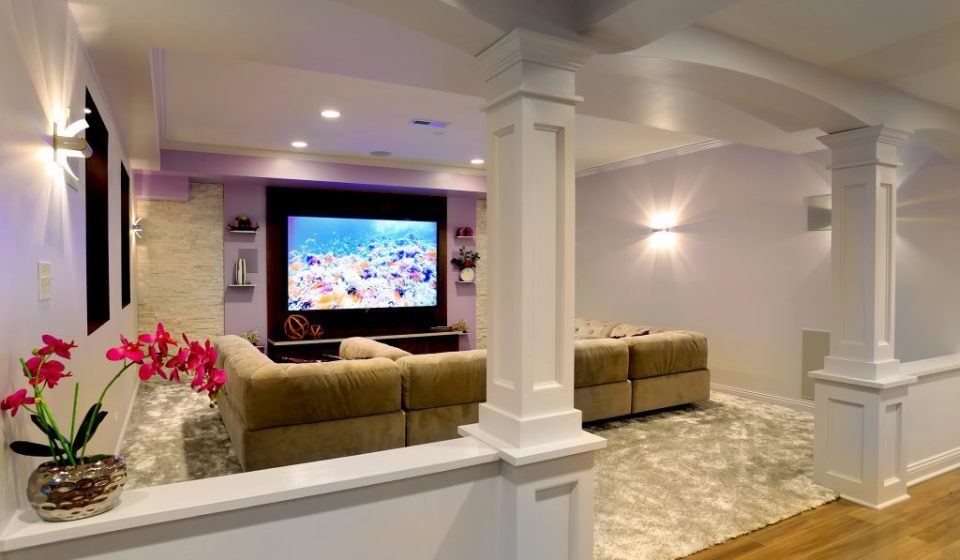
A post near a sectional can become the edge of a seating area if you wrap it in the same wood tone as nearby shelves. A post beside a game table can feel like a natural boundary when paired with pendant lighting or a floor rug. The column becomes part of the map.
The counterintuitive move is to stop hiding every support. Sometimes the best answer is to make the post more visible, but in a controlled way. A clean wrap, clear sightline, and matching trim can make the column feel calm instead of random.
Choosing Materials That Fit the Basement Environment
Material choice matters more below grade than it does upstairs. Basements deal with moisture, concrete floors, temperature swings, and lower ceilings. A beautiful wrap that swells, stains, or traps damp air will not feel beautiful for long.
Wood wraps add warmth but need smart detailing
Wood is popular because it softens the basement fast. A plain steel pole feels cold. A stained oak, pine, maple, or poplar wrap can make the room feel closer to a finished den than a utility space. That warmth helps in American homes where basements often double as winter hangout rooms.
Wood needs space to breathe. If your basement has any history of dampness, avoid wrapping a post so tightly that moisture gets trapped inside. Use dry lumber, seal exposed edges, and keep the base detail thoughtful where it meets concrete or vinyl plank flooring.
A good carpenter will also make the corners feel intentional. Sharp, square edges give a clean modern look. Slightly eased edges feel softer in family rooms where kids run around. Tiny details decide whether the wrap feels custom or clumsy.
Decorative pole wrap panels can save time and still look custom
Decorative pole wrap panels can be a smart choice when you want texture without building a full box from scratch. Slatted wood, fluted panels, beadboard, and flexible wrap products can cover round or square supports with less mess than a full carpentry build. They also work well in smaller basements where thick boxed columns steal space.
Texture needs discipline. A fluted wrap can look high-end beside a bar or stair landing, but it may feel busy if the room already has patterned flooring, bold wall color, and open shelving. The column should add rhythm, not visual noise.
One honest warning: thin wrap products can reveal poor prep. If the pole is uneven, dented, rusty, or wrapped over old paint buildup, the finish may look cheap. Spend time cleaning, measuring, and planning the base and cap. That is where the finished look earns its keep.
Turning Structural Columns Into Useful Features
A basement column can do more than stand there. Once you accept its location, you can build around it in ways that add storage, lighting, seating, or display space. The best projects make the column feel useful, not merely covered.
Structural column design can support shelves, bars, and built-ins
Structural column design becomes stronger when it connects to something people use. A pole near a wall can be tied into shallow shelving for books, board games, sports gear, or framed photos. A post beside a basement bar can become one end of a drink ledge or small service counter.
A support in a media room can help frame built-in cabinets if the spacing works. In a home gym, a wrapped column can hold hooks for bands, towels, or light accessories, as long as the attachment method does not damage the steel or weaken the support. Function should never come at the cost of structure.
The smart move is to design from the column outward. Do not force a cabinet, bench, or bar to land there by accident. Measure walking paths, furniture clearance, and sightlines first. A beautiful built-in that blocks movement will annoy you every day.
Lighting can make a wrapped pole feel intentional
Lighting changes how a basement post reads at night. A wrapped column with nearby recessed lights can look flat if the light comes from one harsh angle. A small sconce, LED accent strip, or nearby pendant can give the wrap depth and make it feel designed.
This works especially well near basement bars, home theaters, and stair landings. A warm light grazing wood grain or fluted texture can add comfort without adding clutter. In low-ceiling basements, that small glow can do more for mood than another overhead fixture.
Electrical work deserves respect. Homeowners should not cut into a structural cover, run hidden wires, or add fixtures without following local code and safe installation practices. The column may look decorative when finished, but the space around it still has to be treated like part of the home’s working system.
Style Ideas That Match Real American Basement Uses
Most basements are not magazine sets. They hold laundry access, storage closets, kids’ toys, workout gear, holiday bins, extra furniture, and maybe one stubborn utility panel you wish were somewhere else. A pole wrap has to survive that real life.
Family room columns should feel soft, durable, and safe
A family basement needs forgiving design. Sharp corners, glossy finishes, and delicate trim rarely age well when the room handles movie nights, pets, and kids carrying snacks in both hands. A boxed wrap with eased corners, satin paint, and solid base trim usually holds up better.
Painted MDF or poplar can work well in dry basements when sealed and finished properly. For a casual rec room, matching the column to the wall trim can make it recede. For a cozier look, a stained wood wrap can tie into a TV console, stair rail, or floating shelves.
Basement column covers in family spaces should also consider furniture flow. A post beside a sofa should not create a toe-stubbing corner. A wrap near a play area should be smooth enough to avoid scrapes. Design has to live with movement, not only photos.
Bar and entertainment spaces can handle bolder column treatments
A basement bar gives you permission to make the column stronger visually. Stone veneer, dark stained wood, fluted panels, or a two-tone wrap can help the post feel like part of the bar structure. If the column sits near the counter, it can even help frame the entertainment zone.
Decorative pole wrap finishes can also echo common American basement styles. A sports room may lean into stained wood and metal accents. A bourbon-style bar may use darker tones and warm lighting. A modern lounge may call for slim vertical slats and a clean black base.
Bold does not mean messy. One strong finish beats five competing ones. If the bar already has stone, tile, dark cabinets, and open shelves, the column may need to calm down. The best entertainment basements know when to stop.
Conclusion
A basement post is not a design failure. It is a fixed fact, and fixed facts often lead to better rooms when you stop fighting them. The homes that look most polished are not always the ones with the fewest obstacles. They are the ones where every obstacle was given a reason to belong.
Basement Pole Wrapping works best when it respects the structure first and the style second. That order matters. You can choose wood, paint, panels, trim, lighting, shelving, or a bar connection, but the column still has to remain safe, accessible when needed, and suited to the way your family uses the room.
Start with the room’s purpose, then choose the wrap that supports that purpose. A media room, gym, guest suite, and basement bar should not all treat a post the same way. Measure carefully, keep the finish consistent, and bring in a qualified pro when wiring, framing, or structural questions appear.
Make the column earn its place, and the whole basement will feel more intentional.
Frequently Asked Questions
What is the best way to cover a basement support pole?
The best method depends on the room style, moisture level, and pole location. Painted boxed trim works well for clean finished basements, while stained wood, fluted panels, or stone veneer can suit bars and lounges. Never remove or weaken the support.
Can I wrap a basement pole with wood?
Wood works well when the basement is dry and the material is sealed properly. Use straight lumber, protect exposed edges, and avoid trapping moisture against the metal post. In damp spaces, moisture-resistant materials may be a safer long-term choice.
Are basement column covers safe to install?
They can be safe when they are decorative only and do not alter the structural post. Avoid cutting, drilling deeply, welding, or attaching heavy loads without expert guidance. When in doubt, ask a contractor or structural professional before starting.
How do you make finished basement posts look modern?
Modern posts usually look best with clean lines, slim trim, smooth paint, or vertical slat details. Keep the color tied to nearby walls, cabinets, or railings. Avoid bulky caps and heavy decorative molding unless the whole room has that style.
Can a basement pole be turned into shelving?
A pole can be incorporated into shelving when the design is planned carefully. The shelves should attach to safe framing or built supports, not depend on damaging the column. Shallow shelves work best because they add use without blocking walkways.
What material is best for decorative pole wrap in a basement?
Good options include sealed wood, PVC trim, MDF in dry areas, flexible wrap panels, and moisture-resistant composite materials. The best choice depends on basement dryness, budget, and style. Avoid untreated materials where water or humidity has been a past issue.
Should basement pole wraps match the walls or stand out?
Both choices can work. Matching the walls helps the column fade into the room, while contrast can make it part of a bar, seating zone, or design feature. The right answer depends on whether you want the post hidden or celebrated.
Do I need a contractor to wrap a basement pole?
Simple cosmetic wraps may be manageable for skilled DIY homeowners. Hire a contractor when the project involves electrical work, built-ins, stone veneer, framing changes, or uncertainty about structure. A small mistake around a support post can create expensive problems later.