
A beautiful room does not happen because you bought expensive things. It happens because every choice inside that room knows why it is there. That is the difference between a space that looks finished and one that feels like a half-packed suitcase with a lamp in it.
If you want to style interior spaces with real elegance, you need more than trendy objects and lucky guesses. You need restraint, rhythm, contrast, and a bit of nerve. Elegant rooms are not stiff or fussy. They are calm, clear, and confident. They make you breathe slower the second you walk in. I have seen tiny flats feel richer than oversized houses simply because the person arranging them understood scale, light, and mood. Money helps, sure. Taste helps more. The good news is that taste is not some rare gift handed out to a lucky few. It is a skill, and it sharpens fast when you stop decorating by impulse and start shaping a room with intention. That shift changes everything. Once you see your home that way, even a plain corner starts offering possibilities.
Start With Structure Before You Add Personality
Most decorating mistakes begin too late in the process. People shop for cushions, lamps, and pretty trays before they solve the bones of the room. Then they wonder why nothing clicks. A room needs a framework first, because decoration cannot rescue a bad layout or confused visual balance.
Let the Room Tell You Where Things Belong
Every room gives you clues, but you have to stop fighting them. The windows show you where light wants to fall. Doorways tell you how people will move. The biggest wall often asks for visual weight, while the smallest corner may need breathing space rather than furniture crammed into it.
A living room in a narrow city apartment proves this fast. Push a sofa against the longest wall just because it fits, and the whole room can feel like a waiting area. Float it slightly, angle a chair toward the light, and suddenly the space starts acting like a conversation zone instead of a corridor.
Good arrangement is not decoration. It is choreography. When furniture sits where movement feels easy and the eye can rest without confusion, elegance starts showing up before you have added a single decorative object. That is the kind of progress you can feel in your body.
Build a Strong Visual Anchor
A room without an anchor feels restless. Your eye keeps wandering, looking for the point of the whole thing. That anchor might be a fireplace, a bed with a tall headboard, a large artwork, or even a striking window. What matters is that one element quietly takes the lead.
Once you identify that focal point, support it instead of competing with it. I have watched people ruin lovely rooms by scattering five attention-seeking pieces across one wall. Nothing wins, so the room loses. A single bold painting above a simple console often carries more grace than a gallery wall thrown together in panic.
This is where many people overwork a room. They fear emptiness, so they fill every visible surface. Resist that urge. Empty space is not wasted space. It is what gives the anchor its authority and keeps the room from looking breathless.
Choose Proportion Like It Actually Matters
Elegant interiors almost always get proportion right. Not perfect. Right. A tiny rug under oversized furniture makes the whole room look apologetic. A huge coffee table in a compact sitting area turns daily life into obstacle training. Proportion is not academic; it changes how a room feels minute by minute.
You do not need advanced design training to spot a mismatch. Stand in the doorway and look at how much visual weight each piece carries. If one side of the room feels heavy and the other feels forgotten, that imbalance will keep bothering you even if you cannot name it.
The fix is often simple. Raise curtain rods higher so the room gains height. Trade chunky side tables for slimmer ones. Use one generous rug instead of several small ones cutting the floor into awkward pieces. A room feels elegant when its parts seem to belong to the same sentence.
Use Color and Material to Create Quiet Confidence
Once the structure works, the room needs emotional tone. This is where people either find refinement or trip into chaos. Elegant spaces rarely shout. They do not need to. Their power comes from control, and color and material are the tools that establish that control.
Limit the Palette but Not the Depth
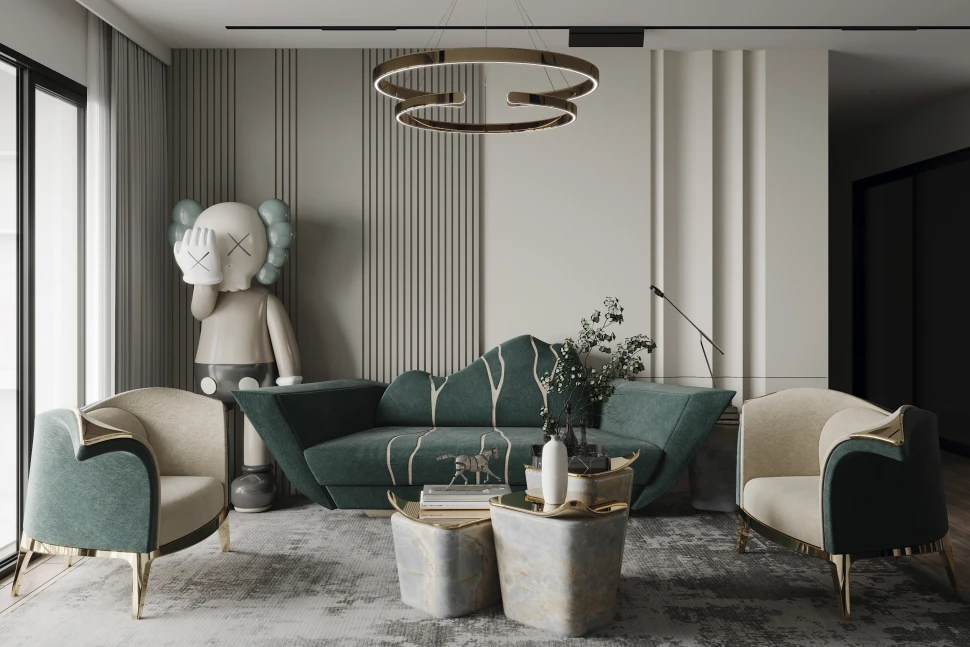
A restrained color palette does not mean a dull room. It means you stop making every item audition for attention. Pick a core group of tones that work with the light in your room, then build depth through variation. Cream beside stone, charcoal beside warm brown, dusty blue beside soft ivory. That kind of layering feels grown-up.
One of the smartest homes I ever stepped into used hardly any color at all. Soft taupe walls, black accents, walnut wood, and muted green from a single oversized plant. That sounds plain on paper. In person, it felt rich because nothing interrupted the calm. The discipline made the room stronger.
This is also where many people confuse elegance with beige boredom. You can still use color. Just choose it with purpose. Deep plum on one chair, rust in a woven throw, or moss green in a velvet cushion can add character without turning the room into a paint chart exploded across your sofa.
Mix Materials So the Room Feels Alive
Texture does half the work in a refined space. Flat rooms feel cheap even when they are filled with costly pieces. Mix hard and soft, matte and polished, woven and smooth. That contrast brings warmth, depth, and movement without visual noise.
Think about what happens when you place linen curtains near a metal lamp, a worn wood bench near a crisp plaster wall, or a boucle chair beside a glass table. Each surface sharpens the one beside it. The room starts to feel layered instead of staged. That difference matters more than people admit.
You can style interior spaces beautifully with very few objects when the materials are doing real work. A simple room with oak, cotton, brushed brass, ceramic, and stone often feels far more elegant than a crowded room full of shiny matching sets. Matching is safe. Contrast is memorable.
Let Light Finish the Room
Light changes everything, and bad lighting can flatten even the smartest design choices. One harsh overhead bulb makes a room look tired, while layered lighting gives it shape, softness, and mood. Elegant rooms know how to glow rather than glare.
You want light at different heights. A ceiling fixture handles general brightness, but table lamps, floor lamps, and wall lights create atmosphere. That shift from top-down light to layered light makes evenings feel intentional instead of accidental. It also flatters your furniture, your wall color, and frankly, your face.
Natural light deserves just as much respect. Heavy curtains that block daylight all day can make a good room feel sullen. Sheer panels, lined drapery, or well-fitted blinds let you control privacy without killing the room’s spirit. A room that catches morning light well already owns half the battle.
Make Furniture and Decor Work Harder, Not Louder
After structure, color, and material come the choices people usually obsess over first: furniture and decoration. Fair enough. These pieces carry the room’s personality. But elegance comes from editing, not from proving you own many things. A smart room does more with less, and it does it on purpose.
Buy Fewer Pieces With Better Presence
A room packed with average furniture never feels luxurious. One handsome armchair, one solid coffee table, and one well-shaped sofa usually beat a collection of filler pieces bought in haste. Elegant spaces rely on presence, and presence comes from shape, finish, and fit.
You can see this in dining rooms especially. A beautiful table with clean lines and chairs that actually suit its scale can carry the entire room. Add a decent pendant and one sculptural bowl, and you are basically done. Yet people keep adding cabinets, stools, extra shelves, and random side pieces until the space feels nervous.
The truth stings a bit: clutter often comes disguised as effort. Buying more does not make you more serious about design. Choosing better does. A room gains authority when every large piece earns its place and none of them look like a compromise made at 11:40 p.m. during an online sale.
Style Surfaces With Restraint and Character
Coffee tables, consoles, sideboards, and shelves are where elegant homes either shine or unravel. These surfaces should look lived in, not abandoned, but they should never resemble a gift shop display. A few strong items arranged with breathing room will always beat a pile of decorative filler.
Try working in small groups with variety in height, shape, and texture. A ceramic bowl, a stack of books, and a single stem in a glass vase can do the job. On a console, maybe a lamp, one framed piece, and a low tray. That is enough. You are styling a home, not stocking a prop warehouse.
What gives these arrangements soul is specificity. A travel book you actually read. A bowl picked up from a local maker. A photograph that means something. For fresh ideas and branded storytelling cues, design readers often browse interior styling inspiration that connects aesthetics with personality. Rooms feel elegant when they reveal taste, not shopping volume.
Know When to Stop Decorating
This might be the hardest skill of all. Many rooms look one layer too busy because the owner never learned to stop. They keep adding after the room already made its point. Another cushion. Another candle. Another basket. Another framed quote nobody asked for.
You know a room is nearly there when adding one more thing makes it weaker, not stronger. Pay attention to that moment. It is easy to miss because decorating can become a comfort habit. Rearranging feels productive. Buying something small feels harmless. Sometimes it is. Often it just muddies the room.
Elegance needs confidence, and confidence leaves a little silence in the design. Let one shelf stay half empty. Let one wall remain clean. Let the side table hold only what matters. Rooms, like people, get more interesting when they stop trying so hard.
Bring Elegance Into Daily Life, Not Just the Photo
A room can look lovely for a picture and still fail in real life. That kind of beauty is brittle. Real elegance survives laundry piles, late dinners, charging cables, guests dropping by, and the odd bad habit you swear you will fix next month. Style only lasts when daily living can coexist with it.
Make Everyday Function Look Intentional
The smartest interiors hide practical needs in plain sight. A woven basket for throws, a handsome tray for remotes, a closed cabinet for wires, hooks where coats actually land instead of chair backs. These fixes are not glamorous, but they protect the visual calm you worked hard to build.
This matters most in family homes and smaller spaces where every object fights for room. I once helped a friend stop hating her entryway by adding a narrow bench, a ledge, and matching wall hooks. That was it. Same square footage, same budget, far better mood. Function can be beautiful when it stops pretending to be an afterthought.
When elegance supports daily habits, you keep the room looking good without a dramatic reset every weekend. That is the real prize. Not a perfect room once a month, but a steady sense of order that holds up even when life gets noisy.
Add Personal Pieces Without Breaking the Mood
A room without personal detail feels borrowed. A room with too much personal detail can feel chaotic. The trick is choosing what carries emotional weight and presenting it with care. You do not need to hide your life to make a room elegant. You need to curate it.
Family photographs look better when they share a visual language. Travel finds feel sharper when grouped by color or material rather than scattered everywhere. Children’s art can look surprisingly sophisticated when framed simply and given one clear place to live. Personal does not have to mean messy.
The best rooms always have one detail that feels slightly unexpected. Maybe it is a vintage stool in a polished bedroom. Maybe it is a battered old vase that somehow makes the whole shelf sing. That little bit of irregularity keeps elegance from slipping into cold perfection. Perfection is overrated anyway.
Keep the Room Evolving, Not Frozen
A stylish home should not feel trapped in the year you first decorated it. Elegant interiors age well because they allow quiet change. New books arrive. Cushions rotate with the season. Art shifts. A chair moves to another room and suddenly works better there. Good homes stay alive.
This does not mean chasing every trend that floats by on your screen. Please do not do that to yourself. It means noticing when the room needs a refresh and answering with small, smart moves. Sometimes a new lamp shade, deeper paint color, or better curtains will wake up the whole space.
That is the real secret to living with elegance: you keep paying attention. You notice what feels stale, what feels forced, and what still works beautifully. Taste grows through that kind of attention. Slowly, then all at once.
Conclusion
Elegant rooms do not ask for perfection. They ask for clarity. When you stop decorating from panic, stop buying filler, and start making sharper choices about layout, color, material, and restraint, your home begins to feel settled in the best way. It feels like it knows itself.
That is why learning to style interior spaces well matters beyond appearance. A good room changes how you move, how you rest, and how willing you are to invite life in. It supports you without fussing over itself. It looks polished, yes, but more than that, it feels honest. That is the kind of beauty worth building.
So start where the room feels most annoying. Fix the layout. Clear one surface. Replace one weak piece with something that has presence. Let the light in. Then keep going, step by step, with more discipline than drama. Elegance is not reserved for glossy houses or giant budgets. It belongs to anyone willing to edit bravely and choose with care. Your next move is simple: pick one room, make one strong decision tonight, and give your home the standard it deserves.
What is the best way to style interior spaces on a budget?
Start with layout, lighting, and paint before buying decor. Rearrange what you own, remove weak pieces, and invest in one item with real presence. Budget styling works when you focus on proportion, texture, and discipline instead of chasing every trend.
How do you make interior spaces look more elegant quickly?
Raise curtain rods, clear cluttered surfaces, add layered lighting, and choose a tighter color palette. Those four changes shift the mood fast. A room looks elegant when it feels calm and deliberate, not packed with decorative pieces competing for attention.
Which colors make interior spaces feel more refined?
Soft neutrals, earthy mid-tones, deep greens, warm browns, charcoal, and muted blues usually create a refined mood. The trick is not the exact shade alone. It is how the colors relate, repeat gently, and allow texture and light to matter.
How much decor should you use in an elegant room?
Use less than you think. Elegant rooms need a few strong pieces, open surfaces, and visible breathing room. When every shelf, table, and wall is filled, the space loses authority. Edit hard, then remove one more thing for good measure.
Can small homes still feel stylish and elegant?
Small homes can feel more elegant than large ones because every choice becomes visible. Good layout, proper scale, closed storage, and restrained color create order quickly. Small spaces reward discipline, and that often produces a sharper, more polished final result.
What furniture works best for elegant interior styling?
Furniture with clean lines, balanced proportions, and solid materials usually works best. You want pieces that feel settled, not flimsy or oversized. A room gains elegance from fewer better choices, especially when each piece has shape, comfort, and visual confidence.
How do you mix personal items with elegant decor?
Keep meaningful items, but group them with intention. Use similar frames, repeat tones, and give collections room around them. Personal pieces feel elegant when they are curated rather than scattered. Sentiment belongs in good design; it just needs a little discipline.
Why do some decorated rooms still feel unfinished?
They often miss structure. The layout feels awkward, lighting is flat, scale is off, or there is no clear focal point. Decor cannot fix those problems. A room feels finished when the bones work first, then the styling supports that strong foundation